|
|
Naked Launch
The Prologue plus extras
by Daniel Cooper
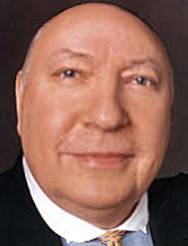
Rupert Murdoch hired Roger Ailes to brainwash
America
into thinking right-wing ideology is actually the political center. And
he did. And, I'm ashamed to tell you, I helped him.
I made a lot of money that year: 1996. I owned and loved living in an
elegant cooperative apartment building on
Park Avenue
in Manhattan, just a few blocks from the Metropolitan Museum of Art and
the Guggenheim. The hallways were floored with inlaid marble. You placed
your garbage in custom designed mahogany chests outside your front door.
The doormen called me mister.
I was a Democrat. Meaning I was so important to right-wing News
Corporation that I was given a piece of what they called "the heavy
lifting" on a project of extraordinary importance to Rupert Murdoch — a
key role in conceiving and building out the Fox News Channel. When I was
done, Roger Ailes, Chairman of Fox News, “reorganized” things and had my
job “eliminated”. How come? Wait and see. But hear me now: the work I did
was the best I had ever done, the best that could be done, and Roger knew
it.
My contract had more than 6 months to run when I was reorganized, and it
contained a pay-or-play clause, meaning that if I were not employed, I
would still have to be paid salary and benefits until the termination
date of the contract, even if I got another job. Did Roger give a shit
that I got paid after he reorganized me? Oh yes.
Roger wanted to break the contract and stop paying me immediately. The
News Corporation attorney assigned to Fox News later told me that she
confronted Roger and told him Fox was going to honor my contract and pay
me until the terminal date. She reminded him that I had done
extraordinary work, and that it was out of the question to do less than
treat me with respect. Roger conceded. The contract concluded in June of
1997. Roger put that turn of events into a bank account called "ROGER
AILES D/B/A DON'T FORGET TO FUCK OVER DAN COOPER FOR THE REST OF HIS LIFE
LLC" That bank account had been opened the day Roger was told to put me
at the center of the launch team. Deposits were being made frequently,
some because I had forgotten to take Groveling and Masochism 101 in
school. The truth is, I'm a bit of a narcissist, and I'm quite impressed
with my own opinions. So I've always gotten myself in trouble with
bosses. On the other hand, I'm really fucking talented.
In July of that year, 1997, I was sweating profusely in the back of a
taxi cruising down
Columbus Avenue
on the
Upper West Side.
I was wearing my favorite outfit, one I favor to this day. I call it my
uniform. It features one of my dozens of Brooks Brothers polo shirts (the
ones with the logo depicting a dead lamb hanging from a rope, amusingly
referred to over the many decades by Brooks as the Golden Fleece), Gap
jeans, Nike sweat socks and Asics shoes. The polo was soaked through from
the humidity. My cell phone jingled and shook. It was my agent, Richard
Leibner.
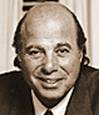
Richard
Leibner was the most powerful agent of TV news personnel in the United
States, representing 800
pound gorillas like Diane Sawyer and Bill O'Reilly. I had known him as a
friend for 20 years and as my representative on and off for just as long.
Richard shouted, "Where are you?". The street noise was deafening. I
screamed "I'm in a cab on the
West Side!"
"Do...you...want...to...executive...produce...a...news...magazine?"
Richard shouted. This was a dumb question. Of course I did. "Turn your
cab around and go see Irwin Weiner right now. Now!" Irwin Weiner had been
CFO of ABC News when the legendary TV pioneer
Roone Arledge was news and sports president. I knew Irwin well,
having worked closely with Roone years earlier on the ABC News magazine
20/20. Irwin now ran an independent production company. Literally
three days later, I had a deal to create and produce a weekly half hour
for WNBC-TV. I plunged into my work. Ultimately, the series was a great
success, and the people I worked for did the one thing that enables me to
do my best — they left me alone. And kept complimenting me. It was a very
pleasant time, except for one thing — I developed an intense crush on a
beautiful 23 year old blond who worked for me, couldn't stand me, but had
a clear idea how to get ahead. Which wasn't helpful with my wife. I
thought I was over falling for women who didn't like me and who were
blatant manipulators. Apparently not.
The fresh air of hands-on production, good ratings, and great people to
work for was healing after the horrible experience of working at Fox. Of
course there's a but, and the but came two months after I went to work on
the NBC series.
In the fall of 1997, the writer David Brock called me and told me he was
researching a cover story about Roger Ailes for
New York magazine. Could he
interview me?
Brock called me, I presumed, because I was the only Fox News executive
who had once been in the inner circle of the inner circle, and was now in
the wild. I knew pretty much everything everybody wanted to know. The
question was, could I talk and live? I paused. Now, I just adore spilling
the beans. It's so much fun knowing something first. But much of what I
knew about Fox News was secret, presumably proprietary information
presumably belonging to News Corporation. And Roger Ailes didn't like
snitches. Well, screw him, right? He needed a smack. Or maybe not a smack
— maybe a tap or something. To play it safe.
I went along with the interview on the condition that it be on background
— meaning no quotes, no "I spoke with a former" anything, that what I
would tell him was strictly for his knowledge. Brock agreed.
Brock opened the conversation with a 10 minute monologue proclaiming his
ill-regard for Roger. This impressed me. Most writers were terrified of
Roger, and he threatened them in no uncertain terms. I asked Brock if
Roger had offered to "destroy him". Brock laughed. Yes, indeed he had.
Ailes told Brock he would "never work again" if he wrote the article.
Brock found this idea hysterical. I didn't.
I answered all of Brock's questions. Two hours worth. Why did I give the
interview about Roger, risky as it was, even on background? Because I
knew about that SCREW COOPER LLC bank account, and I saw the interview,
done carefully, as a way to begin to ingratiate myself with a man I knew
to be a schoolyard bully — a coward at heart. Yes, Roger, I'm talking
about you.
A friend of mine had a father who plied the psychiatric trade. Dad
advised, "Bullies have no ego esteem. They need respect. Always show
respect to a bully". I hadn't done that when I worked for Roger. I was
badly burned. Now, terrified of Roger's wrath and its consequences on my
career, I figured if I filled Brock up with an exclusively complimentary
picture of Ailes and my work, maybe the karma would come back around. And
besides, Fox was so stupid they paid me out without requesting a
non-disclosure agreement. Maybe I was safe. And it was on background.
I raved about Roger's brilliance as a marketing strategist. About his
uniquely focused, intensely demanding leadership. I said I had never done
anything so hard, so well, in such an exciting environment in my life.
And it was all because of Roger's never-ending inspiration. I said
absolutely nothing negative.
When the article was published on
November 17, 1997, it was no longer a cover story.
Like most articles about Roger Ailes, it was only marginally critical,
with just a hint of admiration. It was at the least a toned-down version
of the blast-furnace analysis Brock told me he planned to write. Nothing
in it was traceable to me.
A few weeks before the article was published, I was lounging on the sofa
in my study on
Park Avenue,
watching TV and reviewing scripts. My wife Gina was emailing strange men
in foreign countries on the computer, a habit she seemed unwilling to
break. I was fantasizing about the 23 year old blond, who that day walked
into the elevator facing me, threw her shoulders back, projecting toward
me her extraordinary breasts, stared at me, and backed up against the
opposite wall, putting a sexual no-man's-land between us. The phone rang.
Which phone was ringing? That would be the one on the desk in my study,
remember? I jerked out of my fantasy. The call was from my agent, Richard
Leibner.
Let me repeat for you again, because I want you to hang on to these
facts: the phone rang a few weeks before the
New York article was
published. The call was from my agent, Richard Leibner.
Richard asked me to come in to see him.
Well now. This didn't bode well. When Richard had a job offer for me, he
would always tell me on the phone. Gina suggested I jump in a cab and get
over there right away and not take a nap, which was usually my instinct
in these sort of situations. I always listened to her. Gina had a nose for

trouble unlike anybody I had ever met. She was also the best thing that
had ever happened to me. An extraordinarily brilliant, amazingly
beautiful woman, she was 15 years my junior and the catch of the century.
After six years of marriage, I loved to simply look at her. Her abundant
strawberry hair; her incredible legs; her perfect feet; the six pack she
was developing running ten miles a day in Central Park and working with a
personal trainer at the most expensive health club in Manhattan. It
really was conjugal contentment, just watching her there writing emails
to other men.
Naturally, she had somehow psychically decoded my captivation with the
blond, and things were a bit frosty.
In my jeans and polo shirt, I impatiently waited for the elevator to the
antiqued-up lobby with the massive four foot bouquet of fresh cut
flowers, and ran out into
Park Avenue
to nab a cab before any of my neighbors who were standing on the corner
"ahead" of me.
Richard Leibner's waiting room was a bit over the top. The walls were
overhung with framed magazine covers and articles ballyhooing Richard and
the marvels of his agency, N. S. Bienstock. The greatest item on display
was a front page of Variety with a huge headline reading "TOO MUCH
JACK IN THE BIENSTOCK". This topped an article documenting the bitter
whining by CBS News executives that Richard Leibner was sapping them dry
of money by negotiating incredibly high salaries for his clients there.
Richard's receptionist showed me in right away. His familiar office was
adorned with a jukebox and shelves bearing such hideous tsochkes I
couldn't even look at them. Richard was leaning back in his leather
chair, so far back his head was practically touching the floor — his
favorite position. I plopped myself as usual on his black leather sofa. I
stretched out my legs, intent on looking cavalier. I'm 6' 2", with long
legs and big feet. My sneaker bottoms were up in Richard's view. But I
was braced for the worst, because maybe this had something to do with the
Brock article, which, remember, had not been published yet.
There was nothing in the world of the New York City news media that
Richard Leibner didn't know before everyone else. Could he have found out
about the interview? Richard usually opened all phone conversations and
meetings with a really dirty joke. Not today. In his distinctively Great
Neck,
Long Island accent, Richard leaned forward and
asked me, "Danny. Did yoo give an intavyoo to Noo Yawk magazine?"
I gave him a deadpan stare and paused. So. He knew about the article.
Which hadn't yet been published. Agents were supposed to protect their
clients, and knowing about articles in the works was what they did. But
how could he know I gave a background interview? Brock wouldn't tell him.
I used a deliberately flat tone of voice. "Do you want me to answer that
question?"
"I already know the ansa. I got a phone call from Roger Ailes an owwa
ago. He told me that until I drop you as a cloyent, any demo tapes I send
ovah for talent jobs will sit in the cawwna and gatha dust". Drop me as a
client? Threatening to damage my agent's business if he didn't drop me
from his client roster? Tapes gathering dust if he didn't cut me out?
This was certainly pure Roger, icing the poison cake with a darkly comic
visual metaphor. Roger was part Don Rickles and part Don Corleone. He was
going to leave the tapes there for years maybe, and never have them
dusted. And maybe send photos of them to Richard. Unless Richard stopped
representing me.
I stared at Richard. For a long time. I sat up and leaned in close to
him, face to face. I made the connections. Ailes knew I had given Brock
the interview. Certainly Brock didn't tell him. Of course. Fox News had
gotten Brock's telephone records from the phone company, and my phone
number was on the list. Deep in the bowels of 1211 Avenue of the
Americas, News Corporation's
New York headquarters, was what Roger
called the Brain Room. Most
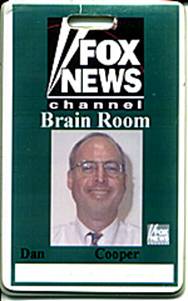
people thought it was simply the research department of Fox News. But
unlike virtually everybody else, because I had to design and build the
Brain Room, I knew it also housed a counterintelligence and black ops
office. So accessing phone records was easy pie.
This threat against my agent was a deadly blow. What would happen when
the NBC series I was working on was cancelled, which was inevitable?
Everything gets cancelled. Everything depended on Richard finding me work
again.
Understand that I knew Richard so well that back in 1980, when he
negotiated his client Dan Rather into his client Walter Cronkite's anchor
chair, he whispered the secret news to me at a party the same night he
made the deal. Understand that I first met Richard in 1976, the day I was
fired as assistant news director of
New York's
famous Eyewitness News. I had embarrassed every other manager in the ABC
owned stations division by strategizing and delivering the highest
ratings in New York television news history. I had
to go. Leibner called me about three seconds after I was fired, and said,
"OK, Danny, you've been fired. Now you can do anything. You're going to
be hugely successful". He got me my job at Fox. I was loyal to him, and a
friend. I thought he was loyal to me.
"I gotta phone call from Roger Ailes, Danny. He told me I have ta drop
you. If I don't, any tapes I send over for on-air jobs will sit in the
corner and gatha dust", he repeated.
"You're going to drop me because of a threat from that shithead?" I was a
rocket of rage, and I flushed beet red.
"What can I do? I have a business ta run". He shrugged.
"Good, Richard. You run your business. I'll take care of myself". I got
up and started for the door.
"Don't just leave! I'll help you find somebody else. I'll make
inchaducshins."
From outside Richard's office, looking in, I said, "I'll take care of
myself, thank you, Richard".
So I had no agent. Gina and I decided it was time for me to get out of
the TV news business. What was the point? Ailes would flatten me at every
turn. And she wanted me close to her, with no more little blond cuties
tempting me. Roger had won. For the time being. Or forever.
Gina
decided she wanted to create an
online
fashion magazine. She thought it would be great fun if we did it
together. And it was. But she had to be the editor, and she had to be the
president of the company. This seemed unnecessary to me — I'm a sharer —
but I loved her and was moderately guilty. I don't know why: Gina told me
she had been stalking the blond and had threatened to break her legs.
Despite living with The Godmother, I was guilty. For months my wife
ordered me, daily, to fire the blond. The truth was, I couldn't. I had
invested tremendous effort in training her, the staff was small, the
production schedule was grueling, and there was no way to toss her out
the window and replace her. She did her job really well. I was dependent
on her.
She was blond and productive. Regardless, on the last day of production,
the blond knocked on my door and asked if we could talk.
The
blond spoke: "Tell me the truth. Did you spend all that time every day
teaching me stuff because you were hoping you could get into my pants?"
This was very offensive. I had been very lucky that during my senior year
at NYU, a news executive at CBS "discovered" and hired me, before
graduation, at 22, as a writer at WCBS-TV. He started me at the top of
the Writers Guild of America pay scale. At the age of 22, I swore to
myself that I would always give similar opportunities to talented young
people. And I always did, in every job, pick or hire one youngster to
tail me, to understudy me, and to take on more and more responsibility.
Some of these mentees had gone on to great success. When I first met with
the blond, interestingly, I didn't find her at all attractive. But I did
see her as having the mentee spark. It was only later, when she would
drop her pen on the floor and bend over with her butt in my face, or get
on her knees next to me behind my desk to look over my shoulder, that
things began stirring. But if I took a seat in an edit room next to her,
she would shift her chair six inches away, implying that I was
inappropriately close at a distance of two feet. This game sucked.
Me: "Do you think I would waste one second of my time teaching you what
has taken me years to learn to get into your goddamn pants? I fail to see
a connection between your pants and your work. You're an extremely
valuable employee. I rely on you every day. You know that. You also know
I'm attracted to you. You're very obviously not attracted to me. And I'm
married." "That's right, you are," she admonished.
"I want you to be my mentor for the rest of my career," she proclaimed.
Oh my fucking God. Gina wanted this over. My shrink told me to make a
choice. Me: "I think it would be best if I didn't see you ever again.
OK?" The blond started crying. A huge downpour of tears. "I brought you a
present. It's a journal. You're such a great writer."
"Thank you. That's very thoughtful." We waited what seemed like an hour
until she cried herself out. I examined her legs for the last time. I
wanted to memorize them. I wanted to eat them. Then the blond stood up
and, dignified, exited.
She moved about a month later to an apartment a few blocks from my
Park Avenue refuge, but that's another story.
Meanwhile, guilt ruled, and Gina was the President of the Cooper family.
My thinking was, marriage is forever. And I really, totally loved Gina. I
never actually cheated on her, except for that one instance of emotional
infidelity (unfortunately, Gina did cheat on me). But Gina was
always there for me, and I had to give her everything I possibly could.
She wanted a company and an
online fashion
magazine. It was the late 1990's. Everybody was creating web sites.
So I gave it to her.
We worked around the clock, schlepped to showrooms, met designers, I
photographed models, the whole thing, got lots of attention, and a large
following, especially of college women. Gina had great, innovative ideas.
The thing was, it was costing a fortune. We had no financial backing. No
ads. To understand just how stupid I was, or, on the other hand, how
wonderful, I drained close to half a million dollars out of my IRA —
taxable early withdrawal money — to support the online magazine. I began
to freak out.
At four in the morning, seated at my computer, my fingers bloody stumps,
I kept telling my wife, "This isn't a business! If we can't get ads we
have to build its value and sell it! We need a proper business plan! Get
an MBA and bring her in as a partner!" This didn't suit my wife. Money?
That was no concern of hers. Gina had grown up in a wealthy family. She
knew how to spend. Once married, it didn't make sense to her to work —
earn money? That was no concern of hers. She was there to cheer me
on, be my co-strategist, cook gourmet meals and follow her bliss. And she
did all that. I would tell her, "Honey, I work in a very volatile
business. I'm not a kid any more. One day, it's going to be over for me
as far as TV news is concerned. Maybe now is that time! You're entering
your prime earning years. I think this is your time to bring home the
bacon, and I'll do my best to develop a second career". I must have said
this 500 times. It wasn't in the cards. Meanwhile, Gina would stand up in
her custom leather pants, a birthday gift I gave her identical to those
then being made for Gwyneth Paltrow, her Stella McCartney couture
original top, and her Sergio Rossi sandals (this
is my photo of Gina in Rossi sandals), and announce, "I am the President!
I make the decisions! Don't worry about money, it's so Jewish, that's all
you think about".
You're thinking, "What a schmuck". And you're right. A few years later I
wound up having to put my beloved apartment on the market, and Gina went
Splitsville leaving a cloud of debt. For me. To pay. Marriage over. She
snagged everything. All I had left were my clothes and a computer. And a
Chapter 7 bankruptcy.
Time went by. I looked for work without an agent. I didn't find any. The
jobs weren't there for me.
In 2001, I moved to
Los Angeles.
For 21 years, people had been telling me I could be huge if I moved
there. Bob Shanks, vice president of late night programming at ABC told
me in 1980 I should be working for
Aaron Spelling.
Roger and Michael King, the uber-programmers behind Oprah,
Wheel of Fortune and Jeopardy! told me I was insane not to
come out and hang out at
Canyon
Ranch with them. But Gina was still in the picture then, and even
though one of my college fraternity brothers was head of television at
ICM, I just wasn't ready to make such
a radical lifestyle change, and Gina was insisting that she was now my
producing partner.
Things changed in 2001. Gina had a new plan — something "black on black"
in movie CIA speak. I should move to LA. Conquer the industry. Meanwhile,
she would stay behind and take on the responsibility for selling the
apartment. I had six weeks before my flight to LA. Which I was to spend
living at my mother's apartment.
Oh, I was angry. I had lived at 1060 Park Avenue for 30 years. My
adult life had played out on that stage. I loved it. I walked out along
Park and wept. Everything was intolerable. But that which could not be
changed had to be accepted. And I had to have the courage to change that
which I could change. I moved to my mother's. I made phone calls all day.
I was booked for weeks in LA. I met with every one of my entertainment
industry contacts in
New York. I assumed Gina was screwing
somebody, or everybody. After a month, I moved back home and told her to
fuck herself, this was my home, and I would leave from here. I didn't see
much of her. She was drinking seriously.
This time, when I touched down at LAX, got into a taxi and headed for the
car dealership to pick up the new car that was waiting for me, a joyful
calm settled over me. This felt so right. The golden sun. A fresh start.
I was happy.
I worked at being a producer, then became a talent manager. I was
becoming a player. Roger Ailes was always in the back of my head. I knew
he wasn't done with me. One of his chief goons, Brian Lewis, would
occasionally send me nasty, mocking notes. The Brain Room spies had me on
the grid, and whenever I popped up as a former Fox News executive Brian
would spit out something like "We always enjoy reading about what you
imagine you did here." The game was I never worked there. I like this
game, because hundreds of people know I worked there. I own this game.
Anyway, in Los Angeles, fearful that Ailes would have some dude in a
Hummer run me down on Mulholland, I determined to wage a another campaign
to trick him into believing that I had seen the error of my ways, and was
ready to eat elephant shit, tons of it, to get past the paranoia. Hardy
har. But I tried. I sent him love letters. When I heard he was talking
with the other top bananas at News Corporation about launching an
entertainment channel and a business channel, I called and made a rousing
pitch for me to create and run the entertainment channel. I was told
"Roger is interested, and he'll get back to you if it looks like it's
going to move forward." Mmm hmm.
Day after day, working at my talent manager desk, always with a small TV
in view, I watched Fox News. Year after year. And the more I watched, the
more disgusted I became. I saw exactly what Roger Ailes was doing. I
watched him shift editorial tactics in ways no one else could see or
understand.
At first, Democrats were not allowed to appear on the Fox News Channel.
Democratic positions were presented by "Fox News Analysts". Video of
Democrats — even their pictures — wasn't allowed on the air. Years
later, once the fair and balanced Big Lie had been brainwashed into all
of our heads, Democrats were welcomed into the studio. And they came in
droves, because by then Fox News was the most influential news source in
America. The Ailes tactics shifted. During interviews, the questions
asked by Fox News anchors became editorials. "Those weapons of mass
destruction are going to turn up any day now! We have to topple Saddam
Hussein. Those WMD's: they're there somewhere, wouldn't you agree Senator
Democrat?"
Lots of people have dissected the Fox News Channel for evidence of bias.
They're all missing the point. Of course it's biased. This is the point:
Fox News is about indoctrination, not bias. The indoctrination was
always hidden, as it is in the best advertising. Roger Ailes spent much
of his life running political campaigns. He was never a journalist, and
in fact he despised journalists. Fox News is not journalism, it’s a
political campaign.
I want to quote from the most influential book I read, as a budding
newsman, while in college. The book is called Freedom and
Responsibility in the American Way of Life. It was written by Carl L.
Becker, once a brilliant historian at
Cornell
University. This is from a section of the book discussing freedom of
speech and of the press:
"The democratic doctrine of freedom of speech and
of the press, whether we regard it as a natural and inalienable right or
not, rests upon certain assumptions. One of these is that men desire to
know the truth and will be disposed to be guided by it."
However: "The chief instruments of propaganda are the press and the
broadcasting stations. No one who does not command a great deal of
capital can establish a broadcasting station. Much less, but still a good
deal, of capital is required to establish a publishing company or a
newspaper"
"... the thinking of the average citizen and his opinion about public
affairs is in very great measure shaped by a wealth of unrelated
information and by the most diverse ideas that the selective process of
private economic enterprise presents to him for consideration —
information the truth of which he cannot verify; ideas formulated by
persons unknown to him, and too often inspired by economic, political,
religious, or other interests that are never avowed." [my italics]
Professor Becker wrote this in 1945, the year he died. He might as well
have been writing tomorrow afternoon. Let's summarize his points:
-
People want to know the truth, and we want to be guided by it.
-
Only rich people can own mainstream media outlets (as you'll see, the
first year budget for the Fox News Channel was $360 million dollars).
-
The way we think about the truth of critical issues is primarily shaped
by these rich people. We can't, by ourselves, verify the accuracy of
the information presented to us by these rich people, and especially
important, the information these rich people present to us is "too
often" colored by a hidden agenda.
A hidden agenda! Fair and balanced indeed. Fox News was a political
campaign, supporting politicians favored by Rupert Murdoch, and twisting
information to make propaganda appear as objective truth.
Making lists, as liberals loved to, of biased information broadcast on
Fox News, as I said, is not the point of historic importance. What's
important is that Fox News changed
America. It emboldened the right. Using the red and blue analogy, it made
the country redder, and it gave the reds the validation they needed to
get out of their chairs and gang up to move the country to their way of
thinking. The maestro conducting the Orchestra of American Right-Wing
Ideology was Roger Ailes. Roger Ailes is one of the most powerful figures
in contemporary world history.
Here's some really incendiary stuff for you to consider:
If it wasn't for Roger Ailes and his then-four year campaign to make
Americans think the right wing is the political center, George W. Bush
wouldn't have been appointed President in the year 2000. Those five
Republican justices on the Supreme Court would never have had the balls
to gang up, follow party orders, stop the vote count in
Florida,
and overturn the Democratic victory. Al Gore and the Democrats gave in to
this coup d'état by the Judiciary because they knew further action would
be seen not as the pursuit of justice and proper application of the
Constitution, but rather that Gore and his party would be tarred and
feathered by the right-wing media, pretending to be centrist, for being
sore losers and a bunch of un-American scoundrels. So Gore walked away in
shame: the man the majority of us elected.
The best thing that ever happened to Roger Ailes was 9/11. Even Roger
Ailes, Machiavellian as he was, couldn't have dreamed up anybody as
fabulous as Usama bin Laden (Allah told Roger to spell it Usama), or UBL,
as Fox News called him. Because somebody up there, or down there, loved
Roger, 9/11 happened on his watch. It gave him the opportunity to throw
gasoline on the bonfire he had already set to scorch and destroy
traditional liberal values. For those of you under 50, the
United
States
once had liberal values. There was even such a thing as liberal
Republicans. That's enough of that, because I know talking about the
Devil's spawn and blond big-boobed temptresses is far more interesting.
But hang on a bit.
While I was working in
Los Angeles,
early in the Fox-hyped action adventure America called the War in
Iraq,
and my marriage was going nuclear, the number of viewers of the newly
American flag-bedecked, happily neoconservative Fox News Channel jumped
300%. By now, the Fox News headline readers were all-American cheerleader
types (blonds with big boobs!), and I always imagined them standing on
each other's shoulders during station breaks cheering on the troops and
our glorious Commander-in-Chief.
By
2005, with the Iraq War worse than ever, the Fox News Channel increased
its total viewership 31% over the same date the year before. President
Bush had rewarded Rupert Murdoch for creating Fox News by allowing him to
own two TV stations in New York City along with the
New York Post newspaper. This sort of multiple ownership has been
granted to no one else, and flies in the face of previous government
regulation of media control. Money was pouring into News Corporation
thanks to Fox News Channel's two revenue streams: cable subscriber fees
and revenues from commercials. And Roger Ailes was reportedly earning $8
million dollars a year (he now makes three times that).
Because of the hysterical reaction to Fox News in the mainstream media,
Fox News has deprived
America
of any semblance of reasonably non-ideological news reporting. You watch
the news every day. You read it. It's completely different from the way
it was before 1996.
One day during the launch, Roger and I had a huge blowup. It was one of
many, but this one shook the building. The tongue-lashing I took from
Roger was so personal, and so degrading, and it was done in front of so
many of my subordinates, that afterward I stormed into a Fox attorney's
office and charged him with abuse. Subsequently, several News
Corporation lawyers apologized to me for Roger's conduct, and made him
apologize to me. One of the statements they made to me was a stunning
admission: "Look. Rupert knows he's having his 15 minutes, and we know
about his behavior". They had already beat Roger up. They begged me to
walk into Roger's office, where he would apologize to me, if I would then
immediately apologize to him. I said no. Then they begged me again. They
pleaded for us to get along. Finally I agreed. I walked into Roger's
office. He sat me down and told me, with a shocking display of warmth,
that I should understand, and this is, like everything else in this
story, a word-for-word quote: "I'm a diagnosed paranoid".
Roger Ailes told me he had been diagnosed as a paranoid. A paranoid soon
to launch a news channel. Following is the American Psychiatric
Association definition of "Paranoid Personality Disorder" DSM-IV 301.0:
A pervasive distrust and suspiciousness of others
such that their motives are interpreted as malevolent, beginning by early
adulthood and present in a variety of contexts, as indicated by four (or
more) of the following:
(1) suspects, without sufficient basis, that others are exploiting,
harming, or deceiving him or her
(2) is preoccupied with unjustified doubts about the loyalty or
trustworthiness of friends or associates
(3) is reluctant to confide in others because of unwarranted fear
that the information will be used maliciously against him or her
(4) reads hidden demeaning or threatening meanings into benign
remarks or events
(5) persistently bears grudges, i.e., is unforgiving of insults,
injuries, or slights
(6) perceives attacks on his or her character or reputation that are
not apparent to others and is quick to react angrily or to counterattack
(7) has recurrent suspicions, without justification, regarding
fidelity of spouse or sexual partner
Remember Roger Ailes, the combination of Don Rickles and Don Corleone?
Let me share with you a story about a typical boy's club meeting on a
typical day during launch. Roger liked boy's club meetings, five guys at
the most, because we could all talk macho and compare the anatomies of
women in the office. I was not macho. These meetings made me very
nervous. I had no feats of daring to boast about. Roger had parachuted
out of airplanes and injured one of those spit-shined leather-clad
tootsies. I was too scared to make salacious comments about women in the
office. Like everyone, I had taken classes in workplace behavior. Not
Roger. "How about those bazookas on that Indian girl, or whatever the
hell she is!" Squirm squirm. "Pussy masala on the menu today?".
News Corporation was full of Australians. Rupert Murdoch was born in
Australia. When you worked at News Corporation in those days, wherever
you went people were talking that Ozzie way, calling you "myte" and
getting "aggro" if you pissed them off.
So, naturally, at News Corporation, you got used to hearing these Ozzies
talking. Roger got used to it too, but not like the rest of us. Roger got
used to mocking the Australians, because it never occurred to him that he
couldn't bully his way out of any sort of offensive behavior.
One of the Fox News Channel launch team members was a smallish, quiet
gentleman called Ian Rae — that's pronounced like a sting ray. Ian had
worked for Rupert Murdoch for a zillion years. He
worked for him on newspapers in
Australia
and England, and he ran the news department of WNYW-TV in New York City, and he was also,
incredibly at the same time, the executive producer of the
long-running, tabloid TV news series called "A Current Affair". Ian was
tight with Rupert; they went a long way back. Most of us knew when you
have a guy like this in the office, somebody who knew the Big Boss and
had been around forever, well, let's say you're rather careful around
him. You didn't have to read "The One-Minute Manager" to know he's a
pipeline upstairs.
Not Roger Ailes.
How did Roger treat Ian? Pretty much like a piece of shit. Roger's
favorite Ian-mocking bit was, of course, to imitate his Australian
accent. This takes balls in an Australian company. Roger was great at
creating a mental caricature of a person, and he pictured Ian as a pig.
Who talked through his ass.
It was a lovely spring day in 1996. The boy's club was in session. There
was a knock on Roger's door, and Ian Rae's head peeked in. In a humble
manner, Ian said something to Roger. What was he saying? I got up and
walked to the door, where I opened it wider. When Ian poked his head in
like this, I couldn't make out a word. His accent was too thick. I knew
Ian anticipated being mocked, and I think that made him shy to speak
assertively. I would open the door to show him he was welcome to come in.
Ian stayed at the door. He said a few words in his thick Australian burr,
pulled his head back and closed the door.
When Ian opened Roger's door, for sure it was important. Opening Roger's
door was a very scary thing to do. But who knew what Ian was saying?
Instantly, Roger's face was overcome with devilish glee. Roger had no
idea what Ian was talking about, and he didn't care. Roger made a fist,
and put it up to his mouth so he was speaking through the space between
his palm and fingers, as though through a tube. "Oim Eeyan Rye!!", Roger
shouted, "An oim tawkin troo me arse!!" This was supposed to be riotously
funny. The other boys howled in hysteria. I sat down and slumped. Roger:
"Eeooo cayn't mike out what oim sighin, becawz oim tawking troo me arse!"
Roger looked at Ian and somehow saw the buttocks of a pig, and a voice
coming out of the sphincter.
This was the man who created the Fox News Channel for Rupert Murdoch.
And I helped him.
‡‡‡
We've all met big
fat guys with double chins, literally round, but with dainty feet. These
guys are graceful. You have a neighbor like this, maybe an uncle. At a
wedding, they hit the dance floor and tip toe around with shiny little
shoes so you'd think they were hippos doing a ballet in Walt Disney's "Fantasia".
The guys I've met like this are always mild-mannered, as though the
slightest assertive sentence might be taken the wrong way because of
their sheer girth.
Roger Ailes is one of these gliding globes, except there's nothing
mild-mannered about him. He got the tough guy gene, and he likes to throw
his weight around. Remembering Fox News anchor John Gibson’s mockery of
the death of actor Heath Ledger built on a foundation of anti-homosexual
prejudice and Glen Beck's who-let-the-dogs-out rants, people wonder where
this sort of insensitivity can possibly come from. The answer is Roger
Ailes, Mr. Tough Guy.
When he got to Fox News, there wasn’t a ballroom for Roger the gliding
globe to waltz around in, but there was what I called The Crystal Palace.
It wasn’t a palace, really, it was just an office, but it was a big one
with a row of massive floor-to-ceiling windows, and a bunch of years
earlier, it had been the office of über-mogul
Barry Diller.
When publisher-TV host Judith Regan introduced Roger Ailes to Rupert
Murdoch, and Roger won Rupert’s tentative approval to launch a cable news
channel, Ailes greatly admired The Crystal Palace, and understood that
sitting under Rupert Murdoch was a good place to dwell and to create a
network as had Diller in the days long before.
Standing on Sixth Avenue in Manhattan, between 47th and 48th Streets,
looking at the building called 1211 Avenue of the Americas (better known
to New Yorkers as Sixth Avenue, because that’s what it is), I thought it
to be a very nondescript skyscraper occupying the entire block. The
building was set back from the sidewalk. Facing it, on the left, a
curious outgrowth of the building extended to the street, only as high as
the building’s lobby. This was an office of Charles Schwab, a discount
stock brokerage. To balance the weirdness of the Schwab blob, on the
right was
a large, elevated concrete planter holding six London Plane trees, all of
them looking very unhappy. There were benches on the planter as well, but
few people occupied them. The London Planes had the ability to see the
future: they knew their fate.
This unlikely building was the
United States headquarters of
News Corporation. On the building’s second floor, clearly visible
through the London Planes, through the row of massive windows, was The
Crystal Palace. From the street, looking at the building, and also from
the
48th Street side, passersby
could see directly into The Crystal Palace, and once settled in, to Roger
Ailes at work. Roger liked the vast dimensions of The Crystal Palace, the
glass Diller table, and the ocean liner desk he ordered for himself. But
Roger feared the fragility, the potential danger, of the glass windows.
And so it came to pass that Roger Ailes summoned me to The Crystal
Palace, and told me “I want all these windows replaced with bomb-proof
glass”.
“Of course”, I said, and promptly called Rudy Nazath, the architect who
was my collaborator on the design of the entire Fox News editorial and
production facility in the building.
Rudy told me “There is no such thing as bomb-proof glass. I don’t even
think there’s protective plastic or glass that can prevent an assault
rifle if it’s fired up close. We can get the heaviest grade bullet-proof
glass available, but what do you need it for?” I didn’t know.
So I asked Roger. “Roger, do you mind if I ask why the glass should be
bomb-proof?”
Roger said “Because as soon as we’re on the air, homosexual activists are
going to be down there every day protesting". He chuckled "And who knows
what the hell they’ll do”. Roger was worried that gays might bomb him.
And so The Crystal Palace came to be lined with bullet-proof glass, and
hideous shades were mounted inside the windows to prevent anyone outside
from seeing in, and on top of the shades there were one inch blinds,
always askew, which made The Crystal Palace appear, from the street, like
an empty, unused store room.
I told Roger that I wanted to mount a camera high on the building across
the street, to capture a live beauty shot of the building and the studio
I named “A”, which was directly below The Crystal Palace. At Roger’s
request, I had set up a giant red lettered news zipper that ran around
the building. We wanted it to look bigger and better than the
teensy-weensy zipper in the shot used every day by NBC’s “Today” show in
Rockefeller Center plaza, across from the skating rink. Roger loved the
idea of the beauty shot, and mounting the camera on a building across the
street, but wisely he asked “What about those piece of shit trees? Don’t
they block the view of the building?”
They did indeed. On the other hand, they added a nice splash of green to
the image; at least, that was my incorrect opinion. “Get rid of the
trees”, Roger told me. “Chop them down”.
What? Chop down the trees?
My stomach tightened. I didn’t know anything about chopping down trees,
and knew that the building was not owned by News Corporation, and
therefore chopping down the trees would be a nightmare of bureaucratic
wrangling.
“Well?” Roger thundered, “What are you waiting for, chop the fucking
trees down”.
“I’ll look into it right away, Roger” I said, heading for the door out of
The Crystal Palace.
“When I come to work tomorrow morning” Roger shouted, “I want those trees
gone! You chop them down yourself in the middle of the night!” I fled the
room.
Days passed while I procrastinated. I consulted with the managing agent,
the News Corporation head of building facilities Tony Fragetti, and
meeting after meeting was held. A war began somehow between me and
Jerry Speyer,
the real estate magnate who owned
Rockefeller Center, who refused to allow a camera to be attached to one
of his buildings, regardless of how much we paid for it to be there.
After all, I was told, NBC was Speyer’s biggest tenant. And
Bob Wright, president of NBC, didn't want Fox having a shot that
looked like the "Today" show.
No one but Roger wanted the trees gone. And every day at the boy’s club
meetings, Roger would glare at me, point toward the window in the
direction of the trees, and yell “They’re still fucking there! Don’t you
have any balls? Chop them fucking down!”
Relief for me and the London Planes eventually came in the form of Anna
Murdoch, Rupert’s wife, who summoned me to meet her in the lobby, the
better to inspect the trees. “I’m afraid I’m a bit of a tree hugger”,
Mrs. Murdoch said to me, “But please don’t tell Rupert I said so. Can we
save them? Move them to a farm somewhere?”
Thus the problem was solved, and so was the issue of the camera across
the street. Rupert won. His real estate broker told me “Jerry Speyer
hates you”. That didn’t sound good. I expressed concern. The broker
informed me “A man is judged by his enemies”. I liked that.
With Mrs. Murdoch having made her views known, I contracted with the very
elite gardener who selects, chops down and puts up the Rockefeller Center
Christmas tree every year, and one evening, when no one much was about,
me watching on the street, his gardeners dug out the six trees, wrapped
their feeble roots, and allegedly drove them off to Suffolk County on
Long Island, where he promised they would be replanted, and perhaps one
or two might survive. And so we had the glory shot, and Roger was safe
from bullets fired by homosexuals. But not bombs, and that was a
compromise that simply had to be made, and Roger was pleased, and it was
good.
‡‡‡
It's the same old
joke. The media executives forget what their parents taught them. They
call a meeting with their accountants, recruiters and lawyers, put their
pair of lace-up shoes on the table, and say "What are these stringy
things? How do I make the shoes stay on my feet"?
The accountants then discuss lace mechanics. The recruiters talk about
lacemanship in the shoe space. And the lawyers promise to notify content
providers that Velcro closures must be used in place of shoe laces in all
media worldwide and in perpetuity.
And the shoe laces remain untied. I know, I'm talking about men. If the
executives were women, instead of shoe laces they'd be trying to figure
out how to squeeze their toes into their Blahniks, to the same effect.
Barefoot CEOs.
In 2008, when I guested on Jay Marvin's radio talk show in
Denver to chat about the prologue of "Naked Launch", Jay asked a very
important question:
"Why didn't CNN react when Fox came on the air with an obviously
conservative news channel? Why didn't they do anything?"
It brought to mind a cover story I was invited to write back in 2003 for
a magazine distributed to 7,000 entertainment industry bigwigs. The
magazine was called "Insights". It was a joint publication of
PricewaterhouseCoopers, the headhunting firm Korn/Ferry International,
and the law firm Lord, Bissell & Brook.
On
July 14, 2003,
I received a phone call from Jody Simon, an entertainment attorney of my acquaintance,
with whom I had been collegially friendly for some two years. An agent
had put us together (of course); we had never done business. Simon had
just moved to LBB from another firm, and had been assigned to the
editorial board of "Insights". I was told that "Insights" was
distributed free to the most important chairmen, CEO's and CFO's in the
entertainment industry. At an editorial board meeting with
representatives from the three firms, a discussion took place about who
could be asked to write (free) articles for an upcoming issue on
"Corporate Leadership and Governance in the Entertainment Space".
Simon had recently read an interview with me in a trade publication, and
he was sufficiently impressed to suggest to the editorial board that I
write an article. The interview Simon had read, I was told, was
circulated to all the board members, and they were all impressed and
agreed that they very much wanted me to write for "Insights".
Thus the July 14th call, during which Simon flattered and cajoled me to
write an article for no pay. I had launched a new business in early
June, and saw this as an opportunity for excellent exposure, so I
requested a meeting with the magazine editor to discuss what I might
write about and the terms of my agreeing to write the article.
The
editor of "Insights" was an LBB intellectual property lawyer, Dennis
Loomis. I met with him for something like two hours. I threw out lots of
possible article topics, and we had an enjoyable discussion. Loomis
repeatedly said he was having a great time: "I have never met with a
writer before they wrote an article! I don't know any journalists! This
is great!"
At the end of the discussion, I asked him, given everything we had
discussed, what topic grabbed him as the one I should write about. He was
decisive. He was very excited about my writing about Roger Ailes'
leadership strategy, and the tactics he used not only in creating the Fox
News Channel, but in rocketing past CNN and MSNBC in the ratings, and
creating a climate where his competitors would self-destruct while he
used positioning strategy, psychological operations and disinformation in
the brilliant manner that I had impressed on Loomis as a new leadership
paradigm in the entertainment industry. Loomis said it was to be the
cover story.
Here's the article as written, followed by more about shoe laces and
Blahniks with spike heels:
POSITIONING TRUMPS CONTENT
By Dan Cooper
The conference room
was tiny, and five of us could barely squeeze around the table. Roger
Ailes was a dominating presence. "I just want to plant the flag", he
said. This was the first meeting of the Fox News Channel launch team, of
which I was a member. We set about writing the business plan. "Plant
the flag", I thought. I pictured astronauts on the lonely lunar surface,
planting the American flag in a barren landscape -- one that one day
might become a thriving colony. In only a matter of weeks, I came to see
that Ailes was going to lead us to the planting of a towering flag above
a triumphant scene of battle -- that the better image would be the
Iwo Jima memorial, although we wouldn't be
the ones suffering casualties.
I hope in this article to turn the standard industry analysis of the
success of Fox News on its head, and in doing so to show you a leadership
paradigm for key sectors of the entertainment industry that's not only
worth your consideration, but points a new direction for this new age of
marketing creative product.
The reasons for the extraordinary success of Fox News are completely
misunderstood. The meltdown of the competition, beyond merely being
overtaken in the ratings, is unprecedented.
Let's examine the commonly held view of the birth of the Fox News
Channel. Rupert Murdoch had been yearning to launch a news channel, one
with a conservative attitude. Whether Murdoch wanted overt slant, adding
a conservative voice to a balanced mix, or any of several other choices,
we'll never know. Most pre-Ailes insiders believed he wanted a news
channel, period, and given his predilection for influencing public
opinion on any given continent, the news channel might in some way give
voice to the Republican party. More than one attempt was made to put
together a proposal for the news channel. None got beyond the planning
stage. But when Murdoch met Ailes, he found what Ken Auletta described
as "a kindred spirit".
Auletta
spent months with Ailes for "The New Yorker", and Auletta understood that
Ailes and all the Murdochs love a good fight ("Brings the blood up",
then-Mrs. Murdoch spunkily told me one day during the News Corp.-Time
Warner battle to get Fox News on basic cable in
Manhattan). Auletta understood Ailes' skills as a political strategist.
But Ailes' leadership paradigm is built not simply on scrappiness and
politics. It's built on marketing strategy, positioning strategy and
military strategy. It's built on creating content after the strategy
is in place and that is shaped to deliver on the strategy, and to waging
war against the competition in a battle that never ends. I urge you
to focus on this approach. Whether you lead a movie studio, head
entertainment for a TV network, or lead in any supercharged battleground
in the entertainment space, Ailes has, for 7 years, been field testing in
secret, and he's developed a weapon of corporate destruction you can add
to your arsenal.
Using the Ailes leadership model requires attitudinal change, and some
org chart changes as well. But the new leadership models for the next
few years are all going to require corporate structural change, and new
approaches to handling creative product, from conception to consumer.
Here's the snap: Ailes did not create a cable channel based on
programming or personalities. He didn't begin by sitting in his office
with his crew saying, "OK, we've got O'Reilly and Hannity in prime time,
what are we going to do the rest of the day, and who's going to do it?"
Nor did he do anything so simple as create a conservative news channel.
After all, Fox News could have been branded as a conservative news
channel. If the common wisdom were true, that would be enough to
position Fox News in its niche and build its audience. But Ailes didn't
do that. In truth, that wouldn't be enough to accomplish what Fox News
has become.
Ailes created a
cable news channel built on a marketing strategy, and a brilliant one,
and a daring one. The programming, and the talent, and all the creative
elements, were then created, hired and scheduled to serve that marketing
strategy. Ailes positioned Fox News as being "Fair and Balanced".
Early during start-up, Ailes commissioned the usual market research.
Without divulging proprietary information, I will say that Ailes listened
to the feedback, (imagine what you would hear in 1996 about the
likelihood of unseating CNN) and immediately dismissed it. He was already
developing a marketing strategy keyed to positioning and differentiating,
and he was preparing for war.
Auletta compared Ailes with Patton, and the comparison is apt. Ailes
pushed his troops beyond exhaustion, demanding that an incredible job be
done -- build a news channel from scratch in 18 weeks -- while holding
hours-long meetings with his senior commanders during which he expounded
on his vision of Fox News. Ailes is hysterically funny; devastatingly
barbed. When MSNBC launched, with one huge scenic environment featuring
brick walls, stylish doodads hanging from the ceiling and hi-tech anchor
desks, Ailes took to referring to it as the "cappuccino bar" channel.
Think about that. From a positioning point of view, he was mocking MSNBC
for its then-innate yuppieness. He knew they were dead the minute they
went on the air. At these meetings, Ailes would both describe what he
wanted Fox News to look like on air, and he would talk theoretically
about how he would differentiate the Fox product. It was all marketing
strategy. There was no talk about programming. It was simply brilliant.
I
spoke with Jack Trout, the world's foremost marketing strategist. Trout:
"When Ailes came up with 'Fair and Balanced', he re-positioned CNN and
MSNBC as biased". There's the key to it. The day "Fair and Balanced" was
first used was D-Day in the war to destroy the competitors. "We report,
you decide". That is not simply a statement about Fox News. That is a
weapon of news channel destruction. It re-brands the competitors. This
is marketing warfare, and it threw the competitors into confusion and
disarray. The result: incomprehensible programming chaos at CNN and
MSNBC over a period of years. Double-digit ratings declines. Inability
to understand what Ailes is doing. Inability to develop, or even
understand the need to develop, a counter-strategy. Just more talent and
programming mistakes.
Ailes was using the classic approach to launching a war: psychological
operations, or "psy-ops".
Timothy
Lomperis is Chairman of Political Science at
St. Louis
University, and has taught at
West Point:
"You employ psy-ops to get the enemy to make decisions that help you
fulfill your mission. The purpose of psy-ops is to make the enemy
destroy themselves. You work on the enemy’s decision-making processes to
induce them to make the decisions that you want them to make. You soften
targets up with psy-ops first so that you then don’t have to face hard
fighting."
As Fox threatened, then overtook the competition, MSNBC and CNN thought
they had to respond with outspoken conservative on-air voices and/or
flashier news coverage.
Jack Trout: "Me-tooing is not a strategy".
Trout again: "The 'Fair and Balanced' slogan also tells Americans who
are politically right-of-center that they're not out of the mainstream.
They're fair and balanced in their thinking." This is powerful stuff.
Fox News positions itself as "home" to 50% of voting
America,
and brands the other news channels as biased liberals, throwing them on
the defensive and into a state of confusion, and then adds to the mix
disinformation.
Timothy Lomperis: "Disinformation is designed to misdirect the enemy so
that you can hit them where you really want to hit them." While CNN and
MSNBC, to this day, continue to be caught up in total uncertainty about
their prime time schedules, because they still believe what they are
confronting is simply a right-wing news network with a fire-breathing
chairman whose outrageous antics are laughable, Roger Ailes has a clear
battlefield, and can leap 36% in ratings in a single week, as he did one
week in August.
How do CNN and MSNBC fight back? Trout says CNN has to re-position
Fox as the conservative news channel disguised as "Fair and
Balanced". That means war, developing a market strategy and
programming to it. Stop thinking about shows and talent, and focus on
market position and differentiation. MSNBC has a harder go of it. First
of all, there's the tendency for the market to narrow to two major
brands: Coke and Pepsi, Hertz and Avis. If NBC is up for the battle, they
too can declare war, but for them, the positioning choice is guerrilla
war.
How does the Ailes leadership paradigm serve other sectors of the
entertainment industry?
I posit to you that at key points of intense competition, new marketing
approaches must be taken, and leaders must be warriors. As I mentioned
earlier, it's not going to be enough in the next few years to get by on
traditional techniques of creating marketable product, promoting it and
putting it in front of the public. The battle must be taken to the
competition. They must be repositioned in the minds of the customers.
It's no longer enough to tell them your product is good -- you've got to
create strategies that tell them to reject the competition.
Think about negative political campaigning. It's nasty, but it works.
As examples, look at the danger each weekend poses in the movie sector.
Studios cannot use the same marketing techniques over and over. Consider
attacking the competition. Why not give moviegoers a reason not to see
the other guy's picture?
Look at prime time network television. The prevailing view has always
been that because the networks are massive in reach they cannot niche,
ruling out a network having a unifying marketing strategy. They are
show-driven. But they can re-brand the competition. They can use
marketing strategy to attack competing programming. Look at the subtlety
Ailes used in creating the phrase "Fair and Balanced". I'm not
suggesting attack promos, plot giveaways, or anything so obvious (or am
I?). But common concepts like counter-programming, stunting and
must-see-TV are not the only strategies in the tool kit. I'm urging you
to think like a warrior -- to lead your troops into battle, to create new
strategies and new weapons.
Entertainment leaders: get out of the box where product is created:
you've got to rely on marketing to figure out how to position it. Start
with marketing strategy, create product, then fight to kill.
***
OK, so that was the
article, again, written in 2003. As you can imagine, A-listers from David
Geffen to Michael Eisner were so impressed that in 2004, I earned close
to $5 million dollars in consulting fees. Not.
Here's one of the reasons I never heard from any of them: the article was
never published. Why? Because PricewaterhouseCoopers, Korn/Ferry and
Lord, Bissell and Brook demanded that I take every reference to an NBC
property and a Time Warner property (CNN) out of the article. They didn't
want to risk offending their clients. With the facts. That could help
them make money. And learn to tie their shoe laces and put on their
Blahniks.
Don't get me wrong. All three publishing partners loved the article. They
raved about it. Loomis: "I and all my INSIGHTS colleagues think your
article is a terrific piece that would be an outstanding contribution to
INSIGHTS".
Then I received the following memo from Loomis:
"The INSIGHTS editorial board member from
PricewaterhouseCoopers [his name was Peter Winkler --Dan]
expressed some concern that your article was excessively critical of CNN
and MSNBC -- each of which is a significant client of PwC. In
consideration for his concern, I suggested that he attempt to edit the
article so as to temper what he felt was "too harsh." He's done so and
that revised version is attached".
Loomis continued, "Frankly, I deliberately read his "edit" without
directly comparing it with your original, and I don't detect much
difference - I think the verve, energy and "punch" are all still there.
We're ready to publish as attached (I still need to merge the recent
change on "psy-ops," which will be done), subject to your green light.
Please let me have your thoughts."
My thoughts were "Go fuck yourself". Without referring to the
competition, the article was ridiculous and incomprehensible. But it was
sanitary as far as PricewaterhouseCoopers was concerned.
I refused to let them publish it. They went berserk. They demanded it.
They pleaded with me. I had dated Jody Simon's assistant, Shauna Kim.
Long before. But they made her call me to tell me she thought I was being
unreasonable, and that she thought the article was fantastic. She wanted
me to let them run it. I refused.
Remember Jay Marvin's question: "Why didn't CNN react when Fox came on
the air with an obviously conservative news channel? Why didn't they do
anything?"
Well, who wants to see the other coach's game book before the game?
Nobody, right?
If you're an executive at NBC or Time Warner, you know what to do. Call a
meeting. Call in your ultra high paid expert outsiders. Put your untied
shoes -- in the form of a losing cable news channel -- on the table.
Trust them to give you the candid, unvarnished truth. Just don't do
anything bold or innovative, OK? Be a copycat. Don't put yourself on the
line. Hang on to that job at all costs, until they dump you anyway. Think
talent and shows. And wonder, year after year, why the Fox News Channel
is dominating you.
‡‡‡
I don't know about
you, but I like to think about the good old days. As a New Yorker, I
remember buying ice cream every afternoon after school from the Good
Humor man. His name was Uncle Dan. He drove a freezer truck down our
block every day. Nobody was ever scared that Uncle Dan or any other Good
Humor man might harm one of the small children clutching coins in their
palms to buy a pop.
On the other hand, when I was in the fourth grade, I had a teacher, Miss
Something, who became very agitated and rip snorting mad when one of us
in her class displayed poor penmanship. My penmanship at that stage
wasn't what it might have been. It was kind of jerky. I really tried hard
to shape my letters like the ones on the sign above the blackboard, but
perhaps my bow tie was constricting my blood flow and my brain couldn't
get my hand to write a shapely bit of alphabet. Certainly not remotely as
good as the girls, who made big round letters with little hearts dotting
the i's. Miss Something, every day, would stride over to me, put her
hands tightly on my shoulders, and vigorously shake me as punishment for
my bad penmanship. Those were not good days.
Roger Ailes likes to remember the good old days too. Unfortunately for
the historical record, Roger seems to have a case of selective amnesia
about the launch of the Fox News Channel. Maybe that's because those days
weren't good days for him at all. Maybe they were bad days, because he
was scared out of his mind that he couldn't deliver what he had promised
to Rupert Murdoch. He sure was angry a lot: pretty much every day. Well,
good news! He's forgotten all that.
Here's an excerpt from a memo Ailes wrote to his staff
Friday, February 8, 2008:
On
February 6, 1996, exactly twelve years ago this week
I walked into this building for the first time as a new employee of News
Corporation to build a cable news channel for Rupert Murdoch. At that
time we had no employees, no studios, no control rooms, no executives, no
staff, no news gathering capabilities, no equipment, no programs, no
stars, no male or female divas, no international operations and no perks.
Also, according to the press, absolutely no prospects of success. We had
to take on GE, NBC, Microsoft, and Time Warner simultaneously with fewer
resources and we had just six months to create and launch the channel.
Many good people joined me here, some of whom are still here today and
others joined a successful channel as we grew. Many of you have made
great contributions toward our success. I thank you all and Mr. Murdoch
thanks you.
Roger Ailes thinks the day he walked into the
building for the first time "we had no employees, no studios, no control
rooms, no executives, no staff, no news gathering capabilities, no
equipment, no programs, no stars, no male or female divas, no
international operations and no perks."
Incorrect.
Nothing could be
further from the truth. And what's more, Roger relied on some of these
people, me included, to be the key players in creating the Fox News
Channel.
There was already a Fox News. It had a president. His name was Joe
Peyronnin. Peyronnin was still there when Roger arrived that wondrous
day. Peyronnin had been a senior executive at CBS News prior to joining
Fox News, and has had a distinguished career since Roger tossed him down
the mail chute. Mark Pearlman, formerly vice president of corporate
development at CBS, was the Fox News executive vice president of finance
and operations. These two guys worked there beginning in 1995.
There were dozens of other people, and I don't
want to bore you with a list. But here are some of the most important:
Richard Friedel was the vice president of engineering of Fox News. Ian
Rae and CNN veteran George Case were senior executives in charge of
what's called the affiliate feed: the generating and feeding of national
and international news reports and video to all the Fox television
stations around the country. And they had correspondents out around the
country covering stories every day. And guess who two of them were. No!
Go ahead! Guess!
One of them was Shepard Smith! Yup, Shep was
already working at Fox News before Roger Ailes got there. And so was Rita
Cosby. Amazing, right? Who could discover these future stars, perhaps
candidates for Ailesian diva status, other than Roger himself?
As for studios, in 1995 we built an entire bureau
with newsroom and studios and control room in
Washington, DC. That was one of my projects.
We certainly had newsgathering capabilities, including satellite trucks
and, I'm not sure that I recall this correctly, but I think wheelbarrows
to carry Shep and Rita around the country so they could cover breaking
news.
Yes, we had "equipment".
We didn't have Fox News Channel programs because there was no Fox News
Channel. But before Ailes was hired, Joe Peyronnin was trying to get Fox
News Sunday on the air, but was having trouble because Mitchell Stern,
then president of the Fox owned television stations, didn't want to carry
it. Peyronnin was also developing a prime time news magazine. One of
Oprah Winfrey's producers, Lloyd Kramer, was involved with that. So, no
programs under the Peyronnin regime, that's true. But Fox News did
produce a weekly news magazine called "Front Page" that was on the air in
1993 and 1994 every Saturday night on the Fox television network. The
executive producer was David Corvo, who for years now has been the
executive producer of "Dateline NBC". We had a political unit headed by
Emily Rooney, Andy's daughter, who had been executive producer of ABC's
"World News Tonight", and has for many years now been the host of a daily
"Nightline"-like show on WGBH, the educational station in
Boston.
We had no international operations that I'm aware
of, and as to perks, we certainly had a coffee making machine. And a big
refrigerator.
So you get the point. Roger doesn't like to remember any of this, so he
apparently doesn't. Amnesia, you know? He did it all himself. Like God.
First the earth was wild and waste. Then Roger said "let there be
television!" And, you know, if you don't like it, keep in mind the doors
aren't locked from the outside.
All of this what-happened-before-Roger stuff, and
the launch itself, is the story of "Naked Launch".
Central to Roger's amnesia, I suspect, is that the Fox News Channel
launch team initially consisted of four people: Mark Pearlman, the
brilliant finance executive, Mark's right hand man Russell Epstein,
Roger's only hired executive at that point Jack Abernethy, and me. And it
was the team of Pearlman, Abernethy, me, Friedel and Epstein who remained
as key players throughout the launch. At which point all of us except for
Abernethy were dispensed with.
If you're planning to have amnesia, be sure to eliminate the evidence.
Remember that, OK?
|
|